




The second National School of Rectors, "University of the Future: Advanced Personnel Training, Technological Sovereignty, Education in the Digital Environment, and the Export Potential of Higher Education," opened in Minsk on August 26. Organized by the Ministry of Education, the forum brought together the heads of the country's leading universities, representatives of government agencies, the National Academy of Sciences, the High-Tech Park, and the business community. Andrey Parfievich, Rector of Brest State Technical University, is participating in the forum.
The event began at the Belarusian Television and Radio Broadcasting Company (Belteleradiokompaniya). Participants were given an introductory workshop on interacting with the media when covering high-profile news events. The panel "Focus on Youth: Media Hygiene and Education in the Digital Age" featured expert discussions on the creation and maintenance of a university Registry of Creative Online Authors, mechanisms for combating false information and destructive content among students, the development of indicators for assessing the effectiveness of mentoring, and the creation of multidisciplinary youth editorial boards based at student media centers in partnership with national media outlets.
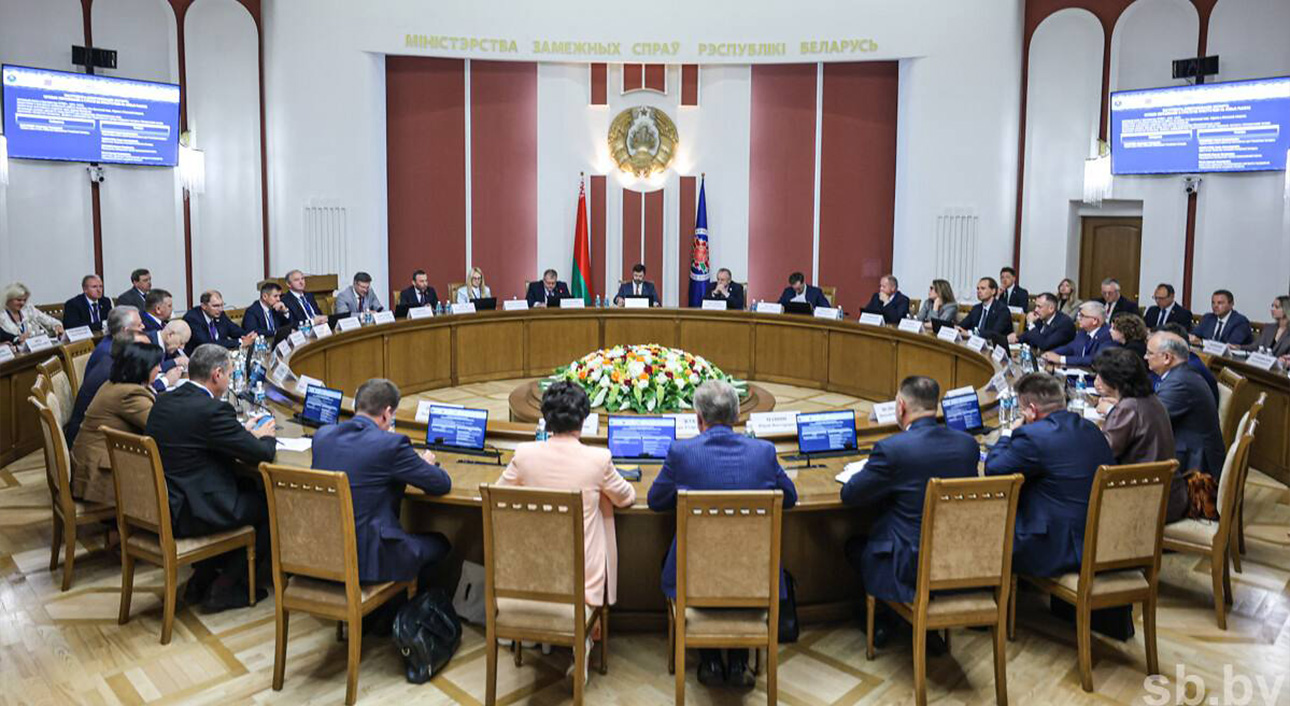
The next venue was the Ministry of Foreign Affairs, where the panel "Tools for Export Diversification: Online Education and Strategies for Presence in New Markets" continued. The focus was on the integration of universities into the BRICS+, SCO, and EAEU space, the legal and cultural aspects of operating in the markets of Southeast Asia, Africa, and Latin America, attracting international students through diplomatic channels, foreign missions, and embassies, as well as organizing business missions through the Belarusian Chamber of Commerce and Industry to promote educational services and targeted marketing with the support of the National Export Support Center.
A section entitled "Knowledge Economy and Technological Sovereignty: Commercialization, Financing, and Integration of Science" was organized at the National Academy of Sciences of Belarus. Participants discussed the commercialization of scientific and technical results, the transfer of university technologies to the real economy, and the mechanisms for interaction between academic and university research. Attracting state and grant funding for national and regional scientific and technical programs was also discussed. Participants also discussed ways to increase the attractiveness of scientists and researchers, improve the effectiveness of dissertation councils, and enhance the effectiveness of postgraduate and doctoral programs.
The first day of the forum concluded with a section entitled "Managing the University Digital Landscape: Ethics of Artificial Intelligence, Generative Neural Networks, and Digital Infrastructure" at the High-Tech Park. Current topics related to the use of neural networks in higher education were discussed, including the implementation and adaptation of academic ethics of artificial intelligence in the educational process; Regulations and procedures for declaring the use of neural networks by students in completing qualifying projects; optimization of the university's digital infrastructure for knowledge-intensive software solutions; and a digital landscape for higher education based on information technology and cybersecurity.
Along with the work of the educational sections, participants of the National School of Rectors took part in a patriotic event at Victory Square. In a solemn atmosphere, they laid flowers at the Victory Monument, paying tribute to the heroes of the Great Patriotic War.
The school will continue on August 27 at the National Children's Technology Park, where reports from section moderators will be presented, an open discussion will be held on the results of the off-site workshops, and the Resolution of the Second National School of Rectors and management recommendations for higher education will be adopted.
